THE ENTAIL OF THE
COVENANT
OR
THE SAVIOUR’S “LITTLE ONES”
BY
SIR ROBERT ANDERSON, K.C.B., LL.D.
“It is not the will of your Father which is in heaven
that one of these little ones should perish.”
MATTHEW xviii. 14.
|
|
Sir Robert Anderson (1841-1918) |
|


|
|
PREFACE TO THE ELECTRONIC VERSION
Alfred Corduan, 2003
“The Entail of the Covenant” was published by Sir Robert Anderson sometime during the first world war – a library copy that I found listed on the Internet was published in 1914, a scant 4 years before his death. The source for this out of print document, which does not give the original date, is found in Volume 10 of the “Assembly Writers Library” published March 1984 by Gospel Tract Publications, 7 Beech Ave, Glasgow G41 5BY. The original document has lost its copyright – the publisher of the reprint was happy to see me convert the text to electronic form and make it freely available. My request to any seeking to make further use of this document is to give credit to Gospel Tract Publications for the reprint and include their address.
The Author
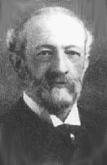 Sir Robert Anderson (1841-1918) is a
singular individual in many respects. He is highly esteemed by believers for
his many excellent works, all characterized by clear, penetrating logic.
Several of his books are still in print, regarded as definitive and unsurpassed
in their spheres, which is a testimony to the greatness of this man. Perhaps
his most well known work is “The Coming Prince” which is considered by
many to provide one of the best treatments available of Daniel's prophecy of
the 70 weeks. “Daniel in the Critics Den” addresses the ways those that
pseudo-intellectuals have sought to discredit the book of Daniel. Also well
known is “The Gospel and its Ministry”, regarded by many as the
definitive treatment of the Gospel and the fundamental doctrines associated
with it. Volume 10 of the “Assembly Writers Library” contains two other
works: “Human Destiny”, which deals with various “wider hope/universal
salvation” doctrines (and which C. H. Spurgeon describes as "the most
valuable contribution on the subject I have seen"), and “Misunderstood
Texts of the New Testament”, addressing many scriptures that have caused
confusion and controversy among believers.
Sir Robert Anderson (1841-1918) is a
singular individual in many respects. He is highly esteemed by believers for
his many excellent works, all characterized by clear, penetrating logic.
Several of his books are still in print, regarded as definitive and unsurpassed
in their spheres, which is a testimony to the greatness of this man. Perhaps
his most well known work is “The Coming Prince” which is considered by
many to provide one of the best treatments available of Daniel's prophecy of
the 70 weeks. “Daniel in the Critics Den” addresses the ways those that
pseudo-intellectuals have sought to discredit the book of Daniel. Also well
known is “The Gospel and its Ministry”, regarded by many as the
definitive treatment of the Gospel and the fundamental doctrines associated
with it. Volume 10 of the “Assembly Writers Library” contains two other
works: “Human Destiny”, which deals with various “wider hope/universal
salvation” doctrines (and which C. H. Spurgeon describes as "the most
valuable contribution on the subject I have seen"), and “Misunderstood
Texts of the New Testament”, addressing many scriptures that have caused
confusion and controversy among believers.
He was well known in public life in his day as an outstanding lawyer and government servant. As a secret agent for the British government he was very effective in gathering intelligence on the Irish Fenian movement, a precursor to the modern IRA. When this role was discovered the British government relocated him to London and gave him an honored appointment in Scotland Yard as Assistant Commissioner of Metropolitan Police and Chief of the Criminal Investigation Department. In this position he played a key role in the “Jack the Ripper” investigation (1888) and his works and conclusions on the subject are integral to any consideration of the matter. Interestingly enough, this is the time when the popular “Sherlock Holmes” mysteries were being written - Sir Robert and his staff were the true “Sherlocks”. The records show that crime decreased in London during that period. He directed this work till 1901, when he was knighted upon retiring.
The Topic
“The Entail of the Covenant” deals with the salvation of children and, because the Calvanistic doctrine of election plays largely on this, specifically challenges the scriptural basic of this teaching. The subtitle of the book, “The Savior’s Little Ones”, is taken from Matthew 18:14: “It is not the will of your Father which is in heaven that one of these little ones should perish.” The verse expresses much of the burden of the book: God loves the children and would save them, every one, yet we confuse and hinder them because of carelessness and unscriptural doctrines. We take truths meant for adults and apply them to children with terrible results. He specifically addresses the need to have a known “time when, place where, and manner how” of conversion, establishing that “conversion”, per se, is only for adults, and that young children who trust Christ may well not remember the specific event.
Doubting the Little Ones
My concerns in this area have grown over the years as I have compared our practice with Scripture. We do not expect the little ones to get saved – if they take steps toward the Savior we are afraid to encourage or believe them because, as I have heard over and over, “You have to be careful with children.” Yet the clear words of the Savior stand in stark opposition to this, for He said, “Of such is the Kingdom of Heaven”. If this is true we must expect that children easily come into the blessing of genuine salvation. It is the adults who need extra scrutiny and with whom we must be careful.
Adults can pressure a little child into saying or doing most anything. If we are too anxious to bolster our own reputation as parents and soul-winners that we are unwilling to discern the heart of the child and work with the Holy Spirit as He leads them to the Savior, we are guilty of spiritual “malpractice”. Yet parents who fear the Lord and love and know their little ones are well aware of this danger and are given the grace and insight by God to avoid it. The greater danger is that we, in our fear of “false professions”,[1] commit the opposite evil and demand details of understanding and steps of “repentance” and “conversion” that the Lord in His word never demanded, at least not of children. In this we are delving into concerns that are not ours. It is never our job to “inspect the root” but clearly, always, consistently to “inspect the fruit” – “By their fruit ye shall know them” (Matthew 7:20). We are to “receive one such little one” in His name, seek to nurture and nourish. With those who would endlessly doubt the faith of little ones for their lack of terminology and experience the Savior would be “much displeased”. He would sternly say, “Let the little children come unto me and forbid them not”. Don’t trouble, doubt them – Let them come!
Of Millstones and Stumblingblocks
I have known of a number of obedient children that have sought over many years to be saved . . . to no seeming avail. A father said of his respectful, obedient teenage son: “He would love to be saved”. I wanted to cry . . . this cannot be! The Lord who loves such so much that He sent His Son to die for them, that longs for their salvation more than all our emotions combined cannot make salvation so difficult that those that would come cannot. If the Lord has not hindered them, who has? Could it be we ourselves who have put unscriptural roadblocks and doubts as stumbling blocks in their way, discouraging them, and sending them down a lifelong path of doubt at best, and of rebellion and hell at worst? Are we perhaps at times like the scribes, laying heavy burdens on our children which we will not lift even a finger to help move for them? Hear the following most solemn words of the Savior: “Take heed that ye despise not one of these little ones” (Matthew 18:10), and “Whoso shall offend (stumble) one of these little ones which believe in me, it were better for him that a millstone were hanged about his neck, and that he were drowned in the depth of the sea.” (verse 6). These “little ones”, as Anderson points out, are simply children, such as the one on His lap, that have a heart toward the Savior. Of these He says in verse 14. “Even so it is not the will of your Father which is in heaven, that one of these little ones should perish.” This, coupled with many other solemn words, warns us that the Lord holds us personally accountable if we stumble a little one through our carelessness.
Perhaps we have not been as clear and, perhaps, urgent with our children when it comes to this, the greatest of matters. We have no problem commanding our children on far lesser matters with no room for negotiation. We do not say, “I hope you will choose to not play in the street” or “I am praying that you will not drink this poison”. We do not even say, “If you choose to tell the truth”, or, “I hope that you will obey me”. We say, “Do not play in the street”, “Do not drink this poison”, “You will not lie, you must obey”. Yet, somehow, we have come to believe that the best approach with children regarding their soul’s salvation is a distant praying, hoping, suggesting.
Are God’s commandments to us options or expected requirements? The answer is absolutely clear: The Lord never gives us the option to not obey His commandments. I remember reading that the use of “shalt” by the Lord in the 10 commandments and elsewhere is a unique use of language syntax: He is God and He fully expects that we “shall” do it.
Interesting it is that the characteristic that God focuses on when explaining His pleasure with Abraham, the father of faith and of the faithful, is this: “For I know him, that he will command his children and his household after him, and they shall keep the way of the Lord, to do justice and judgment” (Genesis 18:19) These are the kinds of fathers and mothers that God is looking for today.
Now we know that, unlike the other dangers mentioned previously, salvation involves the depths of the heart rather than an outward act. We also know that genuine salvation is an act of God, begun, carried out, and culminated by Him. Yet, I ask: Is faith in Christ an option or a commandment to our child? Scripture makes it clear: It is a commandment; it is a matter of simple obedience. “And this is his commandment, That we should believe on the name of his Son Jesus Christ” (1 John 3:23) “But God be thanked, that ye were the servants of sin, but ye have obeyed from the heart that form of doctrine which was delivered you.” (Romans 6:17) “But they have not all obeyed the gospel.” (Romans 10:16) The two (faith and obedience) go hand in hand – one cannot be separated from the other.
Are we commanding our children to trust Christ with the same urgency that we command them to obey any other of God’s commands? The degree of our focus, our urgency in this matter to our children is directly proportional to our perception of the danger that they are in . . . as well as our own sense of personal accountability in the matter. And accountable we are. There is no other way to explain the clear requirement of an elder (Titus 1:6) that he have “faithful children”, which is more correctly translated, “children of faith”, saved children. Proverbs 22:6 says, “Train up a child in the way he should go: and when he is old, he will not depart from it.” Note that this does not say, “When he is old, he will return to it”. God lays the responsibility to see that our children are saved squarely on our poor, weak, trembling shoulders – and with this gives us the great hope that He will enable us to do what He has commanded and will save every one of our little ones as we look to Him. Do we have the faith to believe Him?
“Election” = Eli’s Excuse
No believing parent would deliberately push his child away from salvation. No, this happens by default, a result of accepting doctrines and practices “by tradition” from our fathers which we, unlike the Bereans, have never searched out for ourselves. Chief at the root of this is the “Calvinistic” – properly Augustinian – doctrine known as “election”. A parent who accepts this position believes that, no matter how hard he may pray for his child, no matter how diligently he instructs and nurtures, or, conversely, how awfully he neglects and abuses, his son or daughter has already been predestined to heaven or hell. Thus parents are wholly absolved of all responsibility regarding the eternal destiny of their little ones. We talk around this obvious conclusion because it is so condemning, but it cannot be avoided.
Perhaps, when confronted with the destruction of their offspring, some “election”-believing parents would say with Eli: “It is the Lord: let Him do what seemeth him good.” (1 Samuel 3:18) However these are not words of godly submission but rather an inexcusable expression of the careless, lazy indifference that marked this failing leader of God’s people, and which got him and his sons into this trouble in the first place. God clearly laid the matter solidly at his feet. He never loved his sons enough to demand that they trust and follow the Lord with all their hearts, to “restrain” and discipline when they didn’t, and to cry out to the Lord for undeserved mercy for them when destruction was near. He was content to accept the decree concerning his sons as predetermined by an Almighty God, thus absolving him of all responsibility.
Consider how genuine men of God - and I reverently include the Savior - responded when facing the “election” or choice of a God who has stated that He will not repent (Numbers 23:19):
· David could cry out to the Lord day and night over his child which the Lord had clearly stated would die (2 Samuel 12:22) . . . through which, although he had to surrender the child for a time, he gained a Solomon.
· Moses could cry out for – and secure – the Lord’s “repentance” and the deliverance of the people after the Lord had commanded him to “let me alone” to destroy them (Exodus 32:10) . . . and if anyone understood “predestination”, Moses did (Romans 9:17).
· Paul could cry out with unparalleled earnestness for the salvation of all Jews, even to the point of death. (Romans 9:1-4; Romans 10:1) If anyone understood “election”, Paul did.
· The Savior could cry out with the most intense agony to His Heavenly Father for deliverance from the cross even while He knew that there was no other way, simply because “all things are possible unto Thee” (Mark 14:36) . . . and, the Scriptures make it clear, He was delivered (Hebrews 5:7)
These are the expressions from the intense depths of the most godly of hearts: How can we believe any less for our little ones, theology or no theology? Even the great Charles Spurgeon, a staunch “Calvinist”, loved souls so much that he is known to have prayed publicly: “Lord, save the elect – and then elect some more!” This is the heart of love that, although in contradistinction to his received theology, was so in tune with the heart and mind of the Lord that he did not allow these doctrines to color his actions and faith where it really mattered.
No parent is perfect, and the best of parents can have an erring child. The Lord says: “All souls are mine; as the soul of the father, so also the soul of the son is mine: the soul that sinneth, it shall die”(Ezekiel 18:4). We understand that every parent and every child stands on his own feet of responsibility before the Lord. Yet the blind bowing to such doctrines as are widely held amongst us – and the corresponding slackness of purpose – cannot be justified by any believer who genuinely loves both the Lord and his own children, even if such doctrines are promoted by some of the greatest of men.
Without faith it is impossible to please God (Hebrews 11:6), and we know that whatsoever we pray for, believing we shall receive it, it will be ours (Matthew 21:22). The reality is that we cannot believe anything of God that cannot be grounded in His word and promises. Thus a parent believing this evil doctrine cannot pray for his child in faith. His spiritual strength to lay hold on the Lord, the confidence to pray earnestly, with full assurance, for the salvation of his children, is sapped.[2] What a masterstroke of Satan to give him an awesome advantage in the battle to gain their little souls for himself.
Endless controversy has surrounded the understanding of certain scriptures relating to “election” with wise men holding many different positions – Sir Robert Anderson gives a very clear explanation of this scriptural term in the book. Yet there are certain matters which may not be debated and which must form the basis of any acceptance of doctrines such as these. Hear the crystal clear word in our primary section: “Even so it is not the will of your Father which is in heaven, that one of these little ones should perish.” (Matt 18:14) Sir Robert Anderson points out that the Greek makes this emphatic, that the will of the Father is the complete opposite of this. This, coupled with other completely clear sections (1 Timothy 2:3; 2 Peter 3:9 as examples), would force us to choose between some commonly accepted traditional doctrines and the clear spoken Word of God. With the souls of our children in the balance, we must hasten to clear our thinking, cease to be “wise and prudent” and return to our own status as “babes” so that we may have God’s incomprehensible truths revealed to us (Matthew 11:25).
Can Those Who Cannot Remember be Saved?
In the “Gospel Halls” where we gather, and where Sir Robert Anderson also preached and gathered, there is a strong emphasis on the preaching of the Gospel and it is refreshing to hear it preached each Lord’s Day as well as at many other times. Because of our interest in genuineness we have insisted on a certain pattern of salvation that is applied indiscriminately to children as well as to adults. Because of certain error that allows for “covenant” or “household” salvation, i.e. you are saved because your parents are saved, or for a gradual, undefined salvation, we have demanded a known “time when, place where, and manner how” for each one professing Christ as Savior. The zeal is right, the errors are real, but the universal application is wrong.
That the “new birth” happens at least as instantaneously and deliberately – and miraculously – as natural birth cannot be argued. But I cannot find any scripture that demands any level of personal knowledge of the moment or details of salvation as the proof of it. If one were to further stretch the birth analogy, the only recollection I have of my own birth is through the accounts of others. The proof of it, however, is in my present life.
It is interesting that scripture places the onus of remembering on the Lord, not on the believer. Matthew 7:23 says “I never knew you”, not, “You never knew Me”. Note the careful language of Galatians 4:9: “But now, after that ye have known God, or rather are known of God, . . .”. 2 Timothy 2:13 says: “If we believe not, yet he abideth faithful: he cannot deny himself.” Salvation is defined, ultimately, by what God thinks and sees and does, by a name that He writes in a book, not by what is going on at our end at any given time.
Matthew 18:3 states clearly that it is adults, not children, that need a “conversion” experience, as Sir Robert Anderson points out. Steps of repentance from “idols” and “dead works” are reserved for those who have them to turn from. The little children, on the other hand, need largely but to be brought to the Savior . . . preferably by their parents, as Scripture illustrates.
There are those who received Christ at such a young age that as adults they have no recollection of it. Sir Robert Anderson makes this point strongly, and if there is a point to cause controversy it is this (read his footnote at the end of chapter 3). This should, however, not be regarded as abnormal if “of such is the Kingdom of Heaven” refers to young children (and he notes that the Greek in several of the Gospel accounts clearly points to very, very young children).
I know of some saved at 2 and 3 years of age that have minimal recollection of it and yet have over many years as adults borne out the genuineness of salvation. I dare say that it would be difficult to separate their personal memory from that built upon the account of others. I personally know of some who have no personal recollection at all who have borne out the fruit of reality in their lives. The ones I know well speak of a distinct commitment to the Lordship of Christ as adults, but it is certain they were saved previously. Others have a story of the calling of the Savior and a seeking after him, but cannot pinpoint the exact event beyond a period of time[3]. Some of these have been wracked with doubts once coming amongst us – and who could blame them. To one such, near and dear to me, our late and highly esteemed servant of the Lord Fisher Hunter said, “Salvation is a matter of Who you are trusting . . . now!” Or, as Sir Robert Anderson states it at the end of chapter 3: “Looking back for tokens or proofs that we have been born of God, or converted, may take our eyes off the Lord Jesus Christ and plunge us into darkness. Moreover the remembrance of a change experienced at some past epoch of life is no safe anchorage for faith. Indeed it may prove as perilous and false as would dependence on the fact of having been subjected to a religious ordinance or rite in infancy. The Christian is one who believes in the Lord Jesus Christ. He has a present faith in Christ, and not in Christ as Saviour only, but as Saviour and Lord”
Often a child that has early professed Christ later discovers that a further response of faith is required as adulthood is entered; he may feel that he was never saved. This is actually common since the adult mind and thinking is quite different from that of a child. In this case nothing has been lost. A child that sincerely believes that he is saved, that fears the Lord and seeks to please Him will be preserved from much evil and hardening of the heart. Sometimes a second touch is necessary and unavoidable, even as with the blind man who required two “touches” from the omnipotent Savior to be healed (Mark 8:22-24). In such instances I am often hard pressed to discern between salvation and the “filling of the Spirit” – we might well ask ourselves at what point the blind man could actually see, albeit dimly. We leave that with the Lord. But, again, we must accept them and their profession where they are and move vigorously forward.
“Entail”: God’s Desire as the Basis of Believing Prayer and Action
The word “entail” is a legal term meaning: “A predetermined order of succession, as to an estate or to an office”, or “something transmitted as if by unalterable inheritance.” Sir Robert Anderson makes his case that it is, emphatically, God’s will to save every child of believing parents. This does not exclude the others by any means, but it is with our own house that we are immediately concerned. How can we “make disciples of all nations” if we cannot make disciples of our own children? Interestingly, the term “discipline” means, “to make a disciple of”.[4] Interesting, too, that the Lord always looks to the household of one professing Christ with the immediate intention of saving each there as well.[5]
So it is here, with our little ones, that our soul winning must begin, and we may do it with the full assurance of God’s intentions and blessing. May the Lord bless each parent with much grace and wisdom to accomplish this one task, if nothing else, in our lifetime. If we can win our own for Him, our lives will have been successful – if we can’t, not much else really matters.
Conclusion of the Preface
With this lengthy monologue I commend the book to the reader. May the Lord guide and bless each one as these words of Sir Robert Anderson are considered. I would enjoy hearing from those who have benefited from this book, as well as who wish to sharpen my thinking.
I have taken the liberty of electronically linking page references in the book. Those given in the GTP version are misaligned to the printed pages, with the Appendix especially far off, so I did my best to correctly link them up. With that difference and the exception of this “Preface to the Electronic Version” the entire document is as it was written by Bro. Anderson and given in the published version mentioned.
With much love in the Savior,

Alfred Corduan, June 4, 2003
ACorduan@gmail.com (updated 07/18/2011)
www.corduan.com (updated 07/18/2011)
P.S. The web site has pictures of our family, including our 8 children. As I write this our oldest is 16, the youngest almost 1. So, although the above is presented with some boldness, we are still in the trenches with everyone else, proceeding with great need and reliance on the Lord. May He bless and have mercy on His people . . . and save and preserve each and every one of our little children. 07/18/11 – We now have 11 children . . . and the rest holds true.
PREFATORY NOTE
THE lawyer will understand the title of this book, and the sub-title will indicate its meaning to the layman. “The Entail of the Covenant” is a phrase which enshrines a great truth; and the author of it, whoever he be, deserves our gratitude.
The question may suggest itself to some, why the important matter of the Appendix was not incorporated in the text. It is due to the fact that the publication of the book has been delayed on account of the war; and in the interval during which these pages were in type it was pressed upon me that a somewhat fuller treatment of their secondary subject was desirable. And having to choose between recasting several chapters, or relegating the new matter to an Appendix, I adopted the latter alternative.
R.A.
THE ENTAIL OF THE
COVENANT
CHAPTER I
“SUFFER the little children to come unto Me, and forbid them not.” No incident recorded in the Gospels is more widely known than that to which these words pertain. For it appeals to the better side of human nature, and sacred art has made even the most ignorant familiar with it. Can we not picture the scene? The women crowding round the Lord Jesus, with their children clinging to their skirts; and the Saviour rebuking the disciples for trying to keep them back, while with gracious looks and words He encourages the little ones to come to Him. A delightful picture, truly. And yet in one respect of principal importance it is altogether false to fact; for the children of the narrative were new-born babes that lay nestled in their mothers’ arms.
This Gospel narrative throws new light upon one of the most popular of Old Testament promises and precepts: . “Train up a child in the way he should go, and when he is old he will not depart from it.”[6] The Hebrew word here rendered “child” has no such narrow meaning as the Greek term used by the Evangelist Luke in the above cited passage from his Gospel.[7] But the initial word of the precept claims attention. For “train up” fails to convey a thought that is latent in the Hebrew. In the other passages where the word occurs it is rendered “dedicate” in our English Bible.[8]
It is used of the dedication of the Temple, and also of houses for human habitation. And from this we may learn that the dedication of a child implies not only a definite setting apart, but also a purpose as deliberate and continuing as the dedication of a building—a surrender as unreserved as that of Hannah’s vow, “I will give him to the Lord all the days of his life.”[9] And we may learn from it also that a dedication is by no means necessarily to religious uses; for “religion” is not a synonym for piety.[10] It is our privilege thus to dedicate our children to the Lord, but it does not rest with us to decide in what life path they are to serve Him.
The case of Eunice and her son Timothy illustrates the training of a child in a godly Jewish home. It was indeed a case of wholly exceptional interest; for Lystra was a heathen city, without a synagogue, and destitute apparently even of “a place of prayer “—a proof that Jewish residents were few. Strange, it seems, that Eunice should have come to live there. Stranger still that she should have been married to a heathen.[11] And yet though reared amid surroundings so uncongenial and untoward, Timothy inherited the unfeigned faith that had dwelt in his grandmother Lois and in his mother Eunice. But grace does not run in the blood, as sin does, and the Apostle Paul reveals the secret of his blessedness: From a babe thou hast known the Holy Scriptures.[12]
The passage is linked in my mind with an incident of long ago, that occurred during a visit to a certain country rectory. When passing the drawing-room on the morning after my arrival, I heard my hostess’ voice, and on entering the room I found her standing by the window with her infant in her arms; and bending over it she was repeating the hallowed words of the twenty-third Psalm. And I could hear the baby chuckling at the music of its mother’s voice. We are used to hear women talking to their infants in language both trivial and silly, and this was to me a pleasant experience; and as I withdrew unobserved I thought of Eunice and her home at Lystra. At what age an infant’s brain begins to put a meaning upon spoken words, we cannot tell; but from the earliest dawn of his intelligence the mind of Eunice’s child was stored with words of Holy Scripture.
Dr. Edersheim cites an Old Testament instance of this, which is so interesting, and yet so little known, that I quote it here in his own words. There can be no question, he says, that the word translated “prophecy” in our Authorised Version of Proverbs xxx. 1 and xxxi. 1 (and “oracle” in the Revised) is simply Massa, the name of a district mentioned in Genesis xxv. 14, and 1 Chronicles i. 30. And he writes:
“Whether Massa was occupied by a Jewish colony which there established the service of the Lord; or whether through the influence of Hebrew immigrants such a religious change had been brought about, certain it is that the two last chapters of the book of Proverbs introduce the royal family of Massa as deeply imbued with the spiritual religion of the Old Testament, and the queen mother as training the heir to the throne in the knowledge and fear of the Lord. Indeed so much so is this the case that the instruction of the queen of Massa, and the words of her two royal sons, are inserted in the book of Proverbs as part of the inspired records of the Old Testament. According to the best criticism, Proverbs xxx. 1 should be thus rendered: ‘The words of Agur, the son of her whom Massa obeys. Spake the man to God-with-me, God with me, and I was strong.’ Then Proverbs xxxi. embodies the words of Agur’s royal brother, even ‘the words of Lemuel, king of Massa, with which his mother taught him.’ If the very names of these two princes—Agur, ‘exile,’ and Lemuel, ‘for God’ or ‘dedicated to God’ —are significant of her convictions, the teaching of that royal mother, as recorded in Proverbs xxxi. 2—9, is worthy of a ‘mother in Israel.’ No wonder that the record of her teaching is followed by an enthusiastic description of a godly woman’s worth and work (Proverbs xxxi. 10—31), each verse beginning with a successive letter of the Hebrew alphabet, like the various sections of Psalm cxix.—as it were, to let her praises ring through every letter of speech.”[13]
In this connection the case of King Josiah is of intensest interest. The Divine response accorded to Hezekiah’s supplication illustrates both the reality of prayer and its extreme solemnity; for one outcome of his fifteen added years of life was the birth of Manasseh, the wickedest king of Bible story. But “the entail of the covenant” is a Divine truth; and it often happens that the child of a godly home, though he may wander far away in sin, is at last restored; and in the bitterness of his imprisonment in Babylon, Manasseh was brought back to God. But his son Amon had been already trained in his evil ways, and Amon was Josiah’s father. What hope could there be for the child of such a parent! And yet that child’s story portrays him as the most godly king who ever sat upon the throne of David.
What then can have been the influence that was used of God to achieve such a miracle of grace? The commentaries here will tell us nothing; so we must trust to our knowledge of human nature, and of the heart of a penitent who has been Divinely rescued from a sinful life. And can we doubt that as the poor old king surveyed his dreadful past, and the evil he had brought upon his people, and as he realised that his son was rushing headlong down the evil path from which he himself had been so lately turned, he would bethink him of that son’s child who was yet to rule the land? Can we doubt that Manasseh took his baby grandson to his heart, and sought with unceasing prayer to guide his infant steps in the way of life! And God “remembered His covenant,” and Josiah became a second Samuel.
But to revert to the Gospel narrative, these mothers were women of the Eunice type. And their action illustrates the fact so often noticed, that in the days of the Lord’s earthly ministry spiritual women were spiritually nearer to Him even than His specially chosen disciples. So full and simple was their faith, so unreserved their devotion, that “they brought even their babies to Him.”[14] This it was, indeed, that roused the indignation of the disciples. No devout Jew would have barred the approach of children of an intelligent age; but to bring newly born infants to the Lord seemed an intrusion quite unwarrantable.
And the Lord’s response to their appeal illustrates the truth that faith and devotion such as theirs bring abounding blessing. For what they asked was that He would touch their infants, and He not only put His hands upon them, but “took them up in His arms and blessed them.”
If only He were now on earth, as in those wonderful days long past, what Christian mother is there who would not emulate their faith and follow their example! But He is gone to heaven, far, far away beyond the stars, and that makes all the difference. He said, no doubt, that it was expedient for His people that He should go away; but who among us really believes it? We dare not frame the thought in words, but it lurks in many a heart, that His heavenly glory separates us from Him. It has in truth made a difference of the greatest import; but the import of it is that, whereas in the time of His humiliation grace was restrained, it is now enthroned. HE is not changed, and He now wields all power in heaven and on earth.
The Pentateuchal records, we are told, were written for our admonition; is this not quite as true of the Gospel narratives? And surely they are given us not only to stimulate, but to guide our faith. What the Lord did for those godly Jewish mothers, He will do for Christian mothers now. This is no mystic theory of pious visionaries, but a truth of Holy Writ; and a truth that is abundantly attested by Christian experience. For “the ‘entail of the covenant’ is largely borne out by religious biography, and our Churches are mainly composed of the pious children of Christian parents.”
If statements such as these should appear to be out of date today, it is not because the faithful Word has failed, but because the teaching of our Churches is now so leavened with German scepticism that Christians are losing faith in Scripture, and, as a natural result, they are losing hold on God. And the effects of the change are far-reaching, for they influence not only our Christian life but our national character.
The following pregnant words upon this subject are quoted from an address delivered not long since at the University of London by one who has earned fame in several spheres of public life:
“The kind of teaching that was at one time imparted at the mother’s knee, or from the lips of the father of the family, is largely a fast fading memory. ‘Back to the Bible’ should be a patriotic, as well as a religious cry; for the preservation of our liberties, and of our cherished institutions, depends much upon the maintenance of the Bibletaught heart-principles and stout convictions of our fathers.”
Sad to say, the average Christian of today has lower thoughts of God than the Hebrew saints of the olden time. For they knew Him as “the faithful God who keepeth covenant and mercy with them that love Him and keep His commandments, to a thousand generations”[15] —a God “whose righteousness is unto children’s children.”[16] The essential thought in righteousness is compliance with a standard of right; and when the word is thus used of God it can only mean consistency with Himself. “The Same” is one of His self-chosen titles.[17] He is the unchanging God with whom is no variableness, neither shadow cast by turning. Therefore, while with men the use of absolute power is often arbitrary, it is never so with God. No element of caprice ever marks the exercise of sovereign grace. “The entail of the covenant” is a phrase that enshrines a glorious truth.
Hannah made unreserved surrender of her child to God, and the life of Samuel was His answer to that mother’s vow—a life of which the record is one of the brightest passages in Israel’s chequered history. And what God did for Hannah and Elkanah, He will do for His people still. To finish the quotation of which a part has been already cited,[18] “Where there is faithfulness to God, as well as affection to one’s children; where there are earnest prayer and a corresponding pattern; and especially where both parents are of one mind as touching this thing, God will do it for them, and the promise will still hold true, ‘to you and to your seed after.’”[19]
CHAPTER II
A PRECEDING page records a pleasing incident of many years ago. An episode of a very different character still rankles in my memory. The sons of the 1860 revival, like the early converts of Pentecostal times, were zealous in making known to others the gospel which brought blessing to themselves. Not a few, however, were embarrassed and restrained by the doctrine of Election. One of my friends in particular was greatly troubled on that score; and after a brief correspondence with him I arranged to visit him at his house in the country.
On my arrival I found he had another visitor, a famous preacher of those days; and on the Saturday evening we had an earnest discussion, during which I sought to unfold the clear distinction between the Scriptural truth, and the theological doctrine, of election; and I told how my own difficulties on the subject had been removed by the teaching and counsel of Dr. Horatius Bonar. His book, God’s Way of Peace, had helped me much. He there warns his readers against “the awful thought” that “the sovereignty of God” could ever be a hindrance to a sinner, or a restraint upon the Spirit’s work on his behalf; “The whole Bible (he declares) takes for granted that this is absolutely impossible.”
These and other kindred statements in his most helpful book seemed unequivocal; and yet they failed to satisfy me, for I was aware of the treatment accorded by Christian teachers to some of the plainest statements in Scripture on this subject. Just at this time, however, Dr. Bonar came to stay with us at my father’s house, and I thus found ample opportunities for unreserved conversation with him. And I was relieved to find that he was utterly opposed to “handling the Word of God deceitfully.” When I pressed the question how we could reconcile certain seemingly conflicting statements of Scripture, his answer was honest and clear: truths, he said, may seem to us irreconcilable only because our finite minds cannot view them from the standpoint of the Infinite. Never therefore should we allow our faulty apprehension of the counsels of God to hinder unreserved acceptance of the plain words of the gospel of grace.
Great was my surprise and distress to find that all this was vehemently opposed by my fellow-guest. Taking his stand upon the teaching of the Latin Fathers, he boldly repudiated the great basal truth of the Christian revelation — the sovereignty of Divine grace. And in his sermon to the villagers on the Sunday morning he took “election” as his subject, and his exposition of it reached a climax in the following words: “I have a little child of my own: if he is elect he will be converted, he will be saved; if he is not elect, he will be damned, he will be damned, he will be damned!” Three times, and with dramatic emphasis, he repeated these awful and evil words.
To record them here save for a useful purpose would be an offence against good taste. But the blackest of clouds makes the rainbow shine all the brighter; and I use them as a dark background for the Saviour’s words of grace. Seated in the living room of a house in Capernaum — presumably the Apostle Peter’s home—He called a little child to Him, and setting him in the midst of His twelve disciples, He used him as an object-lesson to teach them some much-needed truth. And then, taking the child in His arms—a proof that it was but a little one, perhaps about the age of the preacher’s child of my story— He spoke those words of infinite tenderness and grace:- “It is not the will of your Father which is in heaven that one of these little ones should perish.”[20]
Words such as those of that village sermon leave us benumbed and crushed by the hard and inscrutable decrees of a far-off God, immutable and stern; but here we are at peace in the presence of “our Father which is in heaven,” whose heart-thoughts about our little ones are thus revealed to us. For as we listen to the Saviour’s words we remember the voice that fell from the cloud which overshadowed the disciples on the Transfiguration Mount, “This is My beloved Son in whom I am well pleased, hear ye Him.”
“It is not the will of your Father which is in heaven that one of these little ones should perish.” What a text to display in the nursery of every Christian home! What a text to cheer the heart and stimulate the faith of every Christian parent! And we might bracket with it, not indeed on the nursery wall, but in memory and heart, the Apostolic precept, “Bring them up in the nurture and admonition of the Lord.”
The language of the English Bible is a national inheritance; but it sometimes fails us, and this hard, stiff phrase, “bring them up,” is a poor rendering of the Apostle’s word. He uses it again in the verse, “No one ever yet hated his own flesh but nourisheth and cherisheth it.” The thought is not of a disciplinarian’s duty task, but of the care of a loving parent. And losing sight of this, the passage is sometimes made an excuse for the very evil which the Apostle’s precept is designed to warn against.
The Revised Version reading is better, “Nurture them in the chastening and admonition of the Lord.” Yet even here we must be on our guard, lest we should put a one-sided meaning upon chastening.[21] We need ever to keep in mind that it is “the chastening and admonition of the Lord,” and that grace is the ruling principle of all His dealings with us. The barriers and bolts by which we protect our houses are intended to keep out thieves and other law-breakers, not to restrain, nor even to guide, the law-abiding citizen as he passes on his way. And so here, “The law is not made for the righteous man, but for the lawless and disobedient.” “The grace of God has been manifested training us . . . to live soberly, righteously, and godly.” It is not law but grace that characterises the Divine discipline of the Christian life. And yet it is a deplorable fact that in the nursery of many a Christian home these Divine principles are ignored, and the children are ruled by law.
Another aspect of the contrast between law and grace is given us in the 32nd Psalm. “I will counsel thee, with mine eye upon thee “—that is grace.—” Be not as the horse, or the mule, which have no understanding; whose trappings must be bit and bridle to hold them in.” “Brute force” is needed with the brute creation. But it is not thus that God deals with His people; and yet it is on that principle that many Christian parents control their children. Obedience enforced on the bit-and-bridle system will last only while the child is within reach of the parent’s arm; for law is impotent beyond the sphere in which its sanctions prevail. But to the grace-taught child the influence of an absent parent is what the eye of an unseen God is to the Christian.
The late Mr. Justice Wills, who combined the heart of a philanthropist with the brain of a lawyer, used to deplore the ill-advised legislation which so multiplies petty offences that high-spirited lads, without any criminal intention, are caught in the meshes of the criminal law. But the traps laid by modern bye-law legislation are few as compared with the “don’ts” which confront the children of many a home during all their waking hours. And against this it is that the Apostle’s “Don’ts” aimed “You fathers, don’t irritate[22] your children.”
For the children his only precept is “Obey your parents”; let parents see to it then that they deserve obedience; and more than this, that they make obedience easy. The law, which for the Christian is summed up in the word “love,” is formulated in “thou shalt not” for the lawless and disobedient. And the “thou-shalt-nots” of Sinai have their counterpart in the “don’ts” of the nursery. Grace teaches us to keep His commandments, law warns us not to break them. And it is on this latter principle that children are generally trained. “Don’t be naughty” is the nursery version of it.
The story is told of William Carey, that pioneer and prince of missionaries to the heathen, that when sitting as an honoured guest at the Viceroy’s table in Calcutta, he overheard a fellow-guest’s inquiry whether it was really true that he had been a shoemaker. And he intervened by replying, “No, it is not true, I was a journeyman cobbler.” This was the man who wrote to his son, “Remember, a gentleman is the next best character to a Christian, and the Christian includes the gentleman.” And if a little of the effort used to teach the children not to be naughty were devoted to training them to be gentlemen and ladies, parents would come nearer to fulfilling the Apostolic precept
The words “good” and “naughty,” like disciplinary punishments, should be reserved for very exceptional occasions. Moreover, they are often unintelligent; for the “good” child may be a heavy-headed creature with a sound digestion, who takes life placidly and gives little trouble; whereas the “naughty” child is one who has high spirits, and wants to know things and to do things. And it is the “naughty” children that will make a mark in life, and prove a blessing to their generation—unless indeed they are crushed or soured by ill-advised efforts to make them “good.” Here comes in a warning which the Apostle adds, when giving the Christian parents of Colosse the precept above quoted from his Epistle to the Ephesians: “You fathers, don’t irritate your children lest they be disheartened”[23] Children are never made really good by enforcing bye-law “don’ts,” but by constantly appealing to their better nature, and keeping ever before them a worthy standard and a right motive.
A book that won a well deserved popularity half a century ago records a father’s parting admonition to his boy when sending him to school. “Remember (said he) that you are the son of a gentleman, and don’t disgrace your father.” What a charming illustration of William Carey’s admirable dictum! Indeed it displays, though on a lower plane, the system and the spirit in which a Christian’s children should be trained.
For a gentleman is not a person who has learned by the study of a Book of Manners to avoid vulgarities; he is one whose bearing and conduct are governed by consideration for others. “Don’t be looking each of you to his own interests, but each of you also to those of other people.” Anyone who acts in the spirit of these words is in the best sense a gentleman. And yet these are the very words in which the Apostle exhorted the Philippian Christians to cultivate the mind that was in Christ Jesus.[24] William Carey was right!
“Now, children, remember that Uncle and Auntie are coming to-day on a visit, and while they are here you’re not to and you’re not to— and you mustn’t be naughty.” This is law. And any poor little brat who succeeds in fulfilling it will develop into a prig, which is the nursery phase of being a Pharisee. The other method is, “Now, children, you must all do what you can to make Uncle and Auntie’s visit a pleasant one: we must find out what they like and what they don’t like, and do our best to make them happy.” Such is the teaching of grace; and whatever the uncle and aunt may think of the result, their visit will prove a blessing to the children.
“Lest they be discouraged.” Here is the unfortunate Lady Jane Grey’s account of her home life: “When I am in presence either of father or mother, whether I speak, keep silence, sit, stand, or go, eat, drink, be merry or sad, be sewing, playing, dancing, or doing anything else, I must do it even so perfectly as God made the world, or else I am so sharply taunted or cruelly threatened . . .”[25] A peculiarly flagrant illustration this, of the evil warned against by the Apostle’s words, “Don’t irritate your children.”
The present generation is fast forgetting the great Lord Shaftesbury; and few there are who know anything of the story of his childhood. His parents, we are told, were content as long as he kept out of their way; and the sort of teaching and of sympathy that most of us associate with a mother’s love, the lonely child received from a devout and faithful servant maid, who used to take him on her knee, to read the Bible to him and tell him about Christ. And in the day when all things shall be brought to light, her humble ministry, ignored and forgotten now,[26] will be openly rewarded by Him who immortalised the poor widow’s farthing gift to the Temple Treasury; and the name of Maria Milhis will be for ever associated with all that made Lord Shaftesbury’s life such a signal blessing to this nation and to the world.
What an incentive her story ought to be to any Christian servant who is entrusted with the care of children! And has it no voice for Christian parents? Many a mother takes less care in engaging a nursemaid than the owner of a stud devotes to the choice of his grooms. And yet just as a high-spirited colt may be ruined by an ill-tempered groom, permanent harm may be done to a high-spirited child by an ill-tempered servant. And many a Christian mother leaves her children for hours every day in the charge of a servant who is not herself a Christian. I do not mean who is not “religious”; for no one is more religious” than a Jesuit; and religion without Christ is generally anti-Christian. To plead that in the case of very young children, considerations of this kind may be neglected displays ignorance of human nature and indifference to the will of God.
Another element of much practical importance claims a passing notice here. Most of us are intelligent enough to recognise that not only our temper but our conduct may be influenced by purely physical causes. In a vastly greater degree is this the case with little children; and when thus thrown off their balance they are apt “to run amuck” in any home that is bristling with “don’ts.” Many a child, moreover, is injured by nagging discipline at a time when its real need is a dose of medicine, or careful doctoring. But this is a digression. For these pages are not meant to be a vade mecum on the general subject of training the young. Their aim is to elucidate the precepts and principles which Scripture gives us for our guidance.
CHAPTER III
“TRAIN up a child in the way he should go, and when he is old he will be converted.” This strange perversion of Scripture represents the settled belief of multitudes. “Being converted” is a cumbersome synonym for “being turned”; and the Revisers have done well in adopting the simpler phrase.
If one is walking in the right way, from what is he to be turned? That conversion is essential to salvation is indeed a popular belief. And it is a belief that is the bane of many a Christian home. Christians who in early childhood were “nurtured in the chastening and admonition of the Lord” may be able to specify a time when first they intelligently grasped “the word of the truth of the Gospel.” But that is not what Scripture means by conversion. And in the case many the dawning of the light was so gradual that they are unable to say when the sun actually appeared above the horizon. But they know with certainty that it has risen, and that it is shining on them. And that is the essential thing.
But does not the Lord Himself declare that conversion is essential to salvation? The question is based on a misreading of a gospel narrative already noticed on a preceding page.[27] On his way to Capernaum, after His rejection by the Jewish authorities, He said to His disciples, “The Son of Man is delivered up into the hands of men, and they shall kill Him.” And with these tragically solemn words still ringing in their ears, they fell to disputing which of them would be greatest in the kingdom of heaven. And to them it was, and in these circumstances, He said, pointing to a little child who was standing in their midst, “Except ye be converted and become as little children, ye shall not enter into the kingdom of heaven” —that earthly Messianic kingdom upon which, at that time, their hopes were set. And on the only other occasion on which the Lord is reported to have used the word, He said to Peter, “When thou art converted, strengthen thy brethren.”
But the Apostles were not unregenerate sinners in need of eternal life: they were unfaithful disciples who had fallen out of communion with the Lord. What a lesson is here for the Christian! For we are ever prone to stray into some wrong path; and when we wander thus, and cease to follow Him, we need to be “turned round about.” For this is what being converted signifies in Scripture.[28] Indeed the technical theological term, as popularly used, has no counterpart in the language of the New Testament. Therefore is it that in the Revised Version it has disappeared, save in James v. 19, 20, where its meaning is unequivocal; for it is certain that, in the theological sense, no man can “convert” his fellow.
It is important to keep in view the distinction between the saved and the unsaved in their relations with God; but we must not shut off Divine truths in water-tight compartments. For the saved are apt to go astray “like lost sheep”; and on the other hand, some who are really lost may be seeking the Lord, “if haply they might feel after Him and find Him.” And He is not far from such. But though the prodigal was turned about while in the far country amid the swine troughs, he was not saved till he reached his father’s house. It is the walls of the City of God, not the roads which lead to it that typify salvation.[29]
There is one Scripture which ought to make an end of controversy here. And it is a passage not only of principal importance, but of extreme solemnity. In the earlier period of the Lord’s ministry there was no element whatever of reserve. His teaching was plain and clear, and His mighty deeds of mercy were as free to all as were His words of grace.[30] But what was the response of that impenitent and guilty people? The Hebrew Gospel records the terrible and shameful story: His destruction was decreed by the great Council of the nation.[31] From that time His ministry assumed a new phase. He charged the disciples to tell no one that He was the Christ.[32] His beneficent acts of mercy became less frequent, and He desired to conceal them from the Jewish leaders; and His teaching became veiled in parables.
And when the disciples sought an explanation of the change, Isaiah’s prophetic word supplied the answer. Those evil men had had their day of visitation. But they had wilfully closed their eyes to His works of power, and dulled their ears against His words of grace. And now a sentence of judicial blindness and deafness had been Divinely passed upon them. In future they were to see without perceiving, and to hear without understanding—mark the Saviour’s words—“lest they should be converted (lest they should turn again) and I should heal them.”[33] For He could neither hide Himself, nor yet be silent. And to refuse a sinner who turned to Him was impossible, for that would be to deny Himself.
These awfully solemn words are entirely in keeping with the great principle enunciated in the preceding verse. It is a principle which Bible story abundantly exemplifies; a principle moreover which explains the mystery of many a life. Appeals that used to move the heart no longer reach it: appeals that used to rouse the conscience now fall upon the ear unheeded. It is not that God is changed. He is the Lord God, merciful and gracious, long-suffering and abundant in goodness. But “God is not mocked”: and no one may treat Him as he would not dare to treat a fellow-man. For
“There is a time, we know not when,
A point, we know not where,
That marks the destiny of men
To glory or despair.
“There is a line, by us unseen,
That crosses every path,
The hidden boundary between
God’s patience and His wrath.
“Oh, where is that mysterious bourne,
By which man’s path is crossed,
Beyond which God Himself hath sworn
That he who goes is lost?
“How long may I go on in sin?
How long will God forbear?
Where does hope end, and where begin
The confines of despair?
“An answer from the skies is sent—
Ye who from God depart,
While it is called to-day, repent
And harden not your heart.”
To these same proud religious Jews it was that the Lord addressed the words, “No man can come to me except the Father which hath sent me draw him.” We miss their significance because we have forgotten that it is in the spiritual sphere that the ruin of our race is absolute and hopeless. Therefore is it that religion blinds men to the truth of God, and shuts them out from Christ. Therefore was it that publicans and harlots entered the Kingdom, and men of blameless life, like Saul the Pharisee, became persecutors and blasphemers. “The common people heard Him gladly,” because they knew that they were blind, and therefore they welcomed the light; but to Priests and Pharisees the light was an offence. So the blind received their sight, and those that claimed to see were blinded.[34]
How different His words to the abandoned Samaritan woman at the well of Sychar! “If thou knewest the gift of God, and who it is that saith to thee, Give me to drink, thou wouldest have asked of Him, and He would have given thee living water.” Thou wouldest have asked, and He would have given. Is it possible that blessing could be made more free? Yes, indeed, for Divine grace is infinite; and on the very last page of Holy Writ we have a final proclamation: “Whosoever will, let him take the water of life freely.” And entirely in keeping with this are the charter words He uttered upon the eve of His passion: “I, if I be lifted up from the earth, will draw all men unto Me.” For “before the glorification of Christ, the Father drew men to the Son; but now the Son Himself draws all to Himself.”[35]
Flesh and blood cannot inherit the kingdom of God. Therefore the new birth is as essential for the infant as for the adult. If then it depends on an intelligent receiving of Christ, no infant can possibly be saved. But the new birth must not be confounded with conversion, which, being a conscious turning to God, is experienced only by those who have reached an age at which they can realise the need of it. And, as already noticed, there are many Christians who have known and loved the Lord from such a tender age, that they cannot recollect passing through any such experience as conviction of sin and subsequent conversion. But all Who are born of the Spirit are children of God. Such is the subtilty of error in these days that this seemingly obvious truth needs to be plainly stated.
Looking back for tokens or proofs that we have been born of God, or converted, may take our eyes off the Lord Jesus Christ and plunge us into darkness. Moreover the remembrance of a change experienced at some past epoch of life is no safe anchorage for faith. Indeed it may prove as perilous and false as would dependence on the fact of having been subjected to a religious ordinance or rite in infancy. The Christian is one who believes in the Lord Jesus Christ. He has a present faith in Christ, and not in Christ as Saviour only, but as Saviour and Lord.[36]
“The Shepherd found me in His boundless grace
Before I even knew that I was lost;
My tiny footsteps scarcely had begun
To tread the path of danger ere I saw
The Shepherd close beside me.
‘Twas enough!
No sense of danger made me seek His arms,
I did but catch a glimpse of His clear Face,
Then gladly let Him lift me to His breast.
And only after that, when I was safe,
And felt His arms encircling me with love
Did He Himself point out the road beneath,
And make me see the precipice below.
I saw His love before I saw my need,
I knew my safety long before I knew
The awful death from which He rescued me;
And though I cannot tell when this took place,
Or when I first was clasped in His embrace,
I only know He found me—I am His.”
ADA R. HABERSHON.
CHAPTER IV
THE relation which theology bears to Scripture may be exemplified by that of art to nature. And the parallel would be still closer if the principles and standards of the art of a bygone age were stereotyped, and some accredited tribunal existed to denounce departure from them. For in these strange days, while a readiness to hear anything that disparages the authority of Scripture is deemed proof of mental independence and enlightenment, we are in danger of being cast out of the synagogue if we question the authority of the great teachers of the past, albeit they themselves would have repudiated not a few of the tenets now attributed to them by their disciples.[37]
Back to nature is our aspiration in the sphere of art, and back to the Bible should be our watchword here. And if we study the Bible with an open mind, we shall find perhaps that some of our difficulties will disappear, and others will prove less perplexing than we supposed. But we must not follow the ways of certain schools of controversy, who tamper with any statements of Scripture that seem to clash with their special beliefs and dogmas. To question the Divine sovereignty is to take a first step on the downward path that logically leads to atheism. And any refusal to accept at their face value the plain words in which the gospel of grace is proclaimed on many a page of the New Testament, is to charge the God of truth with a kind of untruthfulness that would not be tolerated among honourable men.
When dealing with truths in respect of which we are dependent absolutely upon a Divine revelation, it behoves us to adhere strictly to the very words of Scripture. And many of our difficulties are due to violations of this important rule. For instance, the theological doctrine of predestination to life, with its terrible alternative, is not based on Scripture, but on inferences from Scripture. The word proorizo, on which such a tremendous superstructure has been reared, occurs in but four passages of the New Testament, and never once in relation to life. Indeed it is only in Romans viii. and Ephesians i. that it is used with reference to the destiny of men; and in both these Scriptures it points to special positions of blessing to which the redeemed are predestinated. The predestination of Romans viii. 29 is to “be conformed to the image of His Son.” And in keeping with this are the words of Ephesians 1. 5, “foreordained unto adoption as Sons.”[38] And in verse 11 it is “to an inheritance,” or (as the Revised Version gives it) “to be His heritage.”
And let us not overlook the statement that it was those whom He foreknew that He thus predestinated. What inference shall we draw from this? Is our future destiny dependent upon the Divine Sovereignty, in the sense that it is in no way influenced by the action of our human will— that proud but perilous prerogative of human nature? I refuse to enter on this well-worn controversy. My purpose is to lodge a protest against drawing any inferences whatever from truths that cannot be reached by natural reason.[39]
If we are predestinated to the adoption of children, let us take the place of children; and instead of becoming ensnared by the learned ignorance of the Latin Fathers, let us accept the Divine words with childlike simplicity, content to be ignorant when the teaching reaches depths we cannot fathom.
And in this spirit let us accept the teaching of the ninth chapter of Romans. The Apostle’s words, both about Isaac and Ishmael, and also about Jacob and Esau, clearly relate to racial and dispensational position and blessing in this world, and not to the eternal destiny of these men or their descendants. The eighth verse is important as refuting the popular doctrine that men are by nature children of God. But to infer from it that Isaac’s descendants are all children of God is flatly opposed to the Apostle’s main argument: and yet this must be accepted if we are to infer that the descendants of Ishmael are all children of wrath.
A reference to Malachi, moreover, makes it clear that the Esau of the thirteenth verse is the Edom family or race, rather than the individual who died fourteen centuries before the prophecy was given. And yet the story of Esau contains that which ought to have restrained the dogmatism of the predestination controversy. “The purpose of God according to election” was not that Jacob should be eternally saved, and Esau lost, but that the elder should serve the younger.[40] And how did this result come about? The twenty-fifth chapter of Genesis ends with the words, “Esau despised his birthright.” And as this position of influence and blessing was divinely given, his sin in bartering it for a mess of pottage is branded as “profanity,” and a place of repentance was denied him. It was not a question of his eternal destiny, but of the birthright he had forfeited. And it is our part to take heed to the warning which his case is used to enforce in Hebrews. Let us then shun the profanity of setting ourselves to discuss whether his sin was not really due to “the purpose of God according to election”!
But what of Pharaoh’s case? Does not this Scripture teach us that God called that evil man into existence for the express purpose of manifesting His wrath, and making known His Divine power in his destruction? Such an interpretation of the seventeenth verse is quite unwarranted. And moreover it robs us of much deeply solemn teaching. The word here used does not mean to “call into being,” but to “rouse,” or “wake up.” The Hebrew of Exodus ix. 16 reads, “For this purpose I have made thee stand.” And this is rendered in the Greek Bible, “For this purpose hast thou been preserved until now.”
The Divine command by the mouth of Moses he treated with contempt. “Who is the Lord that I should obey his voice?” was his impious rejoinder. And when the spoken word was accredited by miraculous power, he called upon his demon-possessed magicians to parody the miracles. It would have been entirely in the spirit of that dispensation if God had struck him down in his sin. But he was preserved—he was made to stand—as a foil for the display of the power of God, and that the name of God “might be declared throughout all the earth.” And yet, if this be separated from the context, it gives a faulty presentation of the character and ways of God. Mark the twenty-second verse: “What if God, purposing to shew forth His wrath, and to make His power known, endured with much long-suffering the vessels of wrath fitted for destruction? In view of these words we may not dare to assert that Pharaoh might not have obtained mercy had he cast himself upon God in repentance and confession.
What a contrast his case presents to that of Nebuchadnezzar! “Of a truth your God is the God of gods and the Lord of kings” —such was the king of Babylon’s confession when he first received proof of the power and presence of Daniel’s God. And when the deliverance of the Jewish Provincial Governors from the burning fiery furnace brought him full conviction, he made proclamation that Israel’s Jehovah was the only God, and He alone was to be worshipped throughout all his empire. Pharaoh’s destiny is certain, but who would dare to say that Nebuchadnezzar may not be reckoned among the redeemed
Pharaoh’s case was akin to that of the Christ rejecting Jews in the days of the Ministry. Because they turned from the light, God blinded their eyes; and if God hardened Pharaoh’s heart, it was because he himself had closed it against abundant proofs of the Divine presence and power. Both cases alike exemplify a great principle that governs “the ways of God to men.” It is a principle of universal application, and it explains the failure of many a Christian life. For if a Christian refuses new light by which God would lead him on, he is in danger of losing even the light he already enjoys.
CHAPTER V
“WE are to nurture our children in the chastening and admonition of the Lord, and thus to train them up in the way they should go; but the promise that they will not depart from it is by no means to be trusted. And if they turn away from God and die impenitent, we may comfort our broken hearts, as best we can, by the knowledge that the result was wholly unaffected by our own unfaithfulness or want of faith for their awful destiny was irrevocably settled in a past eternity by an immutable decree of fate. If they are elect, they will be saved; and if not, they will be damned; and nothing that we do, or fail to do, can influence the issue.”
It is with reluctance that I thus recur again to that village sermon.[41] But I do so because the preacher gave expression to a traditional and well-accredited belief that saddens many a Christian heart, and rests like a night mist upon many a Christian life.
“When the gift of life was proffered us we were conscious in accepting it that we did so freely, voluntarily. Since then, we have come to see that grace did not exhaust itself even in working out our deliverance at a cost so priceless, and bringing it within our reach, but that our very acceptance of the gift was the Spirit’s work, and as directly the action of grace as Calvary itself. But more than this, now that we have received the message, and are come within the scene of joy and blessing to which it bids us, we have to learn that, in a sense fuller and deeper still, grace is sovereign. The gospel of our salvation spanned the open door of grace as we approached it; above the inner portal, we now read the solemn and blessed words ‘Chosen in Him before the foundation of the world.’[42]
With a heart rejoicing and at rest in the sunshine of the Divine presence, the Christian can ponder this glorious truth; whereas the doctrine which the Latin Fathers based upon it leaves us bewildered and benumbed at the shrine of an awful deity whose dread decrees are a veto even upon prayer, for they are as irrevocable as they are mysterious.
But are not all Divine decrees irrevocable? Let Scripture itself decide the question. Did not God decree the destruction of the Sodomites? And yet in response to Abraham’s prayer He promised to spare them if ten righteous men could be found among them. Did not God send His prophet to proclaim to the men of Nineveh that in forty days their city would be destroyed? And yet He cancelled the judgment when the men of Nineveh repented at the preaching of Jonah. Did not God decree the death of Hezekiah, sending His prophet to warn him of his impending doom? And yet it came to pass that, before Isaiah was gone out into the middle court, God turned him back with the message, “I have heard thy prayer, I have seen thy tears; behold I will heal thee.”
Will anyone dare to maintain that God did not really purpose to put an end to the King of Judah’s life, or to destroy the great Assyrian city, and that the words which His prophets uttered by His commandment were intended merely to bring about the results which actually followed. The theology of the Jesuits condones untruthfulness of this kind, and we use strong language in condemning it. Turning away from such evil thoughts, let us firmly grasp the truth, that we have not to do with irrevocable decrees of fate, but with the present action of the living God, who hears not only the prayers of those who are His own, but the cry of penitent sinners who cast themselves upon His mercy.
No Divine promise of favour or blessing has ever failed; but the student of Scripture will recall many an instance of God’s “repenting” in respect of a threatened judgment. And where promised blessing has been delayed, the delay is always due to human sin; but if judgments are held back, the respite is always ascribed to divine long-suffering. The supreme instance of this is the great final judgment, when this earth is to be given up to fire. Surely the sin of man has ere now made it fully ripe for destruction; why then is its doom so long deferred? The answer is explicit it is because of the long-suffering of God, Who is not willing that any should perish, but that all should come to repentance.”[43]
“Chosen in Him before the foundation of the world.” Let us take note of the time and the circumstances in which this wonderful truth was revealed. The covenant people had crucified the Lord of glory, and incurred the further guilt of rejecting the Pentecostal gospel of forgiveness through the blood their wicked hands had shed. For though the Apostle Paul, to whom the great revelation of grace was specially entrusted, had completed the whole circuit of his ministry to Israel, from Jerusalem to Rome, not a single Synagogue had accepted the proffered mercy. “There was no remedy,” and the people of the covenant were set aside. And then it was that, in “the Captivity Epistles,” the great “mystery” truth of the Church, the body of Christ, which had already been foreshadowed, was fully and finally revealed.[44]
The Abrahamic covenant related primarily to an earthly people and to earthly blessings; whereas this “mystery” revelation has to do with a heavenly people, and blessings in heavenly places in Christ. And while the covenant with Abraham was as definitely an event in time as was the covenant of Sinai, this “mystery” reveals a purpose which pertains to eternity and has no relation whatsoever to time.[45]
And yet the “election” difficulties which distress so many Christians depend on assuming that “before the foundation of the world” means some epoch in time prior to 4004 B.C.![46] But eternity is not endless time: it is the antithesis of time. And if the theories of Kant be true—and no metaphysical system is more thoroughly philosophical—and time is merely a law of thought, imposed by the Creator on His finite creatures, all these difficulties disappear. Not that I assume for a moment that this is the right solution of them; but if they can be solved so easily, surely the Christian may dismiss them from his thoughts, and have a heart at rest in the presence of God, with whom what we call past and future may be an eternal NOW.
The assumption that this eternal election includes all the redeemed is one of the many inferences from Scripture which are common in our theology. Certain it is that not only the nations of the saved, but the earthly people of the covenant when again restored, will have their position upon earth; and we have no warrant for assuming that they are within the “chosen before the foundation of the world.” The presumption is that these words refer definitely to the redeemed of this present age, whose peculiar position and blessings are a special burden of the “Captivity Epistles.” And this wonderful revelation must not be frittered away by bracketing it with the ninth chapter of Romans, or other Scriptures, which relate either to the general truth of Divine sovereignty, or to the people of God in other dispensations past or future.
And let us not forget that the same Scripture which reveals this heavenly election teaches also “the mystery of the gospel,”[47] as the Apostle calls the supreme revelation of grace. The truth of a timeless election is thus inseparably linked with a gospel that is “preached to every creature which is under heaven “[48]—the gospel of “God our Saviour, who willeth that all men should be saved and come to the knowledge of the truth.”[49]
This Scriptural truth of election must therefore be kept apart from the Augustinian doctrine. For while the truth is an incentive to faithfulness and zeal, the doctrine affords an excuse for unfaithfulness and apathy. And this, not merely in the case of individual Christians, but of the Professing Church as a body. William Carey proved this to his sorrow when he pleaded in vain for missions to the heathen. “If the natives of India are elect, they will be saved; and if they are not elect, no missionaries need be sent to them” —such was the response his appeals evoked from “the Church.”
We have seen how and when the “mystery truth” of election was revealed; it may be desirable here to mark how and when the doctrinal perversion of it originated.
While Moses was still with the Church in the wilderness, the apostasy of Israel had declared itself. And the later Epistles plainly indicate that, before the Apostles left the earth, the Professing Christian Church was proving false to its trust. As Canon Bernard writes in his Bampton Lectures: “I know not how any man, in closing the Epistles, could expect to find the subsequent history of the Church essentially different from what it is. In those writings we seem, as it were, not to witness some passing storms which clear the air, but to feel the whole atmosphere charged with the elements of future tempest and death. Every moment the forces of evil show themselves more plainly.”
But it was not until the time of the Patristic theologians that the full extent of the lapse from Christian truth and testimony became plainly manifest. Indeed most of their writings related to the heresies that prevailed; and the record of their efforts to maintain a Christian standard of morals is a main feature of the Church history of that age. The devastating persecutions which raged from time to time were a check upon these evils; but when, with the “conversion” of Constantine, that restraining influence ceased, and the Professing Church became free to set its house in order, the apostasy took shape in what we call “the religion of Christendom.”
Speaking generally, “the theology of the Latin Fathers was governed by the old Platonic conception of the ‘transcendent’ Deity, a God far removed from men; whose alienation, moreover, was rendered more terrible by the doctrine of original sin. In their view the benefits of the work of Christ were limited to a privileged few, and their system aimed at extending the number of that minority, and mitigating for them the perils of their position. The simple baptism of the New Testament was remodelled on pagan lines as a mystical regeneration and cleansing from sin, bringing the sinner from under the storm-cloud of Divine wrath into the sphere where a mystically endowed priesthood could minister to him further grace. For in this theology Divine sovereignty became sheer favouritism; election came to mean little more than immunity from wrath; and grace, instead of being, as in the New Testament, the principle of the Divine action, and the characteristic of the Divine attitude, toward mankind, was regarded rather as a sort of spiritual electricity to be communicated to the favoured few by ordinances which owed their validity to a sacerdotal class. The Church, which in their system meant practically the clergy, was the mediator between an alienated and angry God and men depraved and doomed.”[50]
St. Augustine of Hippo was the master mind by whom this system was moulded into the form which it has ever since maintained.[51] The greatness of the man is unquestionable. And his intense piety is manifest in his Confessions, a book that reveals the experiences of a pure and earnest soul reaching out toward God through mists and darkness that fuller Christian truth would have dispelled. For there is scarcely an error in Christendom-religion that cannot be found in embryo in his writings.
As has been so justly said, “Augustine substituted an organised Church and a supernatural hierarchy for an ever-present Christ. To Augustine, more than to anyone else, is due the theory which is most prolific of the abiding curse inflicted on many generations by an arrogant and usurping priestcraft . . . And all that was most deplorable in his theology and ecclesiasticism became the most cherished heritage of the Church of the Middle Ages, in exact proportion to its narrowest ignorance, its tyrannous ambition, its moral corruption, and its unscrupulous cruelty.”[52]
Such then was the soil, and such the atmosphere, which produced the theological doctrine of Election.[53]
CHAPTER VI
CHRISTIANS with an “ism” are unable to study the Bible with an open mind. And when they meet fellow-Christians who are not in sympathy with their particular “ism,” they are apt to become aggressive. The following extract from one of Mr. C. H. Spurgeon’s Thursday-evening lectures expresses this in his own inimitable way:
“I have heard preachers who have seemed to me to bring out a doctrine on purpose to fight over it. I have a dog that has a rug in which he sleeps; and when I go home tonight he will bring it out, and shake it before me—not that he particularly cares for his rug, but because he knows that I shall say, ‘I’ll have it,’ and then he will bark at me and in his language say, ‘No you won’t.’ There are some people who fetch out the doctrines of grace just in that way. I can see them trotting along with the doctrine of election just in order that some Arminian brother may dispute with them about it, and that, then, they may bark at him.”
Many an error is due to our habit of putting theological labels upon words, and then reading their label-meanings into the Scriptures where they occur. The “work out your own salvation” of Philippians ii. 12 is a notable illustration of this. For the received exegesis of the verse assumes that, in his Roman prison, the Apostle had apostatised from the great truth of grace, which was the special trust of his ministry.
“Salvation” as a theological term has no counterpart in New Testament language. The word is “deliverance”; and in every instance the context must guide us as to its application. Here it relates to the errors and dangers by which his beloved Philippians were beset. Being now a prisoner in Rome, his pastoral care of them was at an end; and on this very ground he appeals to them to “work out their own deliverance.”
Strictly speaking, indeed, there are no theological terms in the New Testament. Or if this startling statement calls for any modification, it is due to the influence which the Greek version of the Old Testament may have exercised upon the terminology of the New. Possibly, therefore, a reference to the Septuagint may help us to understand the Scriptural meaning of the word eklektos (elect). “In the choice of our sepulchres bury thy dead.” Such is its first occurrence in the Greek Bible. It was the answer given by the Hethites to Abraham’s appeal for a sepulchre in which to bury Sarah. The best of their sepulchres they placed at his disposal. This we have in Genesis xxiii. Its next occurrence is in chapter xii., where it is used four times of choice cattle and twice of choice ears of corn. In Exodus it is used of choice chariots and choice myrrh. It is applied to Joshua in Numbers xi. 28; and in Deuteronomy xii. 11, to the vows or gifts of the people.
These eleven passages contain the only occurrences of the word in the Pentateuch; and eleven verses in Ezekiel and Daniel give its last appearances in the Greek Bible. In Ezekiel it is used of choice ornaments, choice branches or boughs of trees, choice land, choice cattle, choice spices, choice stores, and choice plants. And in Daniel xi. 15 it is applied to the soldiers of the King of the South. In the Prophets it is used here and there of the covenant people, as for example in half of its twelve occurrences in Isaiah. But in that book it is used also of choice valleys, choice houses, and precious stones, &c. In this regard, however, the most notable passage in all the Old Testament is Isaiah xxviii. 16 (quoted in 1 Peter ii. 6), where the word is applied to Christ Himself.
And now let us open the New Testament. Anyone who has felt surprise at the statement that “conversion” is used primarily of the disciples will be still more surprised on discovering that the first passage where “elect” occurs in the New Testament does not relate to salvation at all but to service. For Divine sovereignty in relation to service is an almost forgotten truth. In the parable of the labourers in the vineyard, all were engaged, and all received their wages. There was no question of any being rejected, but special favour was accorded to the few who alone were eklektoi.[54]
This points to a conclusion suggested by the general use of the word eklektos, whether in the Greek Bible or in the New Testament,[55] namely, that the essential thought which underlies it is peculiar appreciation and special favour, without any element of “chronology,” or any thought of alternative reprobation. And this conclusion is established beyond controversy or doubt by the fact already noticed, that both in the Old Testament and the New the word is used of the Lord Himself. The Christian, therefore, may rejoice in the thought of being one of God’s chosen ones, without having the light of that glorious truth bedimmed by the shadow which Augustinian theology has cast upon it. And the peace and joy which the truth begets will be assured and deep, in proportion as we realise that it is in Christ we are thus chosen. Upon this it is that the absolute security of the believer rests. To trust to our election as an objective fact is not only unscriptural but perilous.
“Give diligence to make your calling and election sure”[56] is the exhortation which Scripture bases on this truth. And this exhortation exposes the falseness of any teaching that would fritter it away by referring it to “mere membership in the visible Church,” or that would turn our thoughts from present blessing and the solemnities of the Christian life, and fix them upon a cast-iron decree of fate in a past eternity. “The elect of God, holy and beloved”[57] are none but those who are “in Christ”; and neither mere professors, nor any class whatever of unregenerate sinners, can have part or lot in such a position. Until the Ephesian saints received the Gospel, they were, as the Apostle reminds them, “without Christ, strangers from the covenants of promise, having no hope and without God in the world.” How can anyone suppose that sinners in this condition are “the elect of God, holy and beloved”![58]
This same Scripture, moreover, which reveals this heavenly election in a bygone eternity, reveals also God’s purpose respecting it in an eternity to come, namely, “that we should be to the praise of the glory of his grace.” The glory of the saved is only a means to an end, and that great end is the glory of the Saviour. It has a temporary purpose also, to be realised here and now, namely, “that we should be holy and without blame before Him in love.” And if all this be forgotten, “the doctrine of Election” may have a harmful influence upon heart and life.[59] The controversy on this subject has been much embarrassed by the use of unscriptural phraseology. For the Patristic theologians neglected the study of the language in which evangelical truths are revealed in the New Testament—I refer, of course, to the typology of the Pentateuch. And this reproach still rests upon our theology; for, as Bengel says, “The elucidation of the doctrine of the types is a problem for future theologians.” The result of this, I repeat, is embarrassing. In our theology, for instance, the death of Christ is called “the atonement,” whereas in Scripture atonement is priestly work for the redeemed people. The doctrine of substitution affords a still apter example. “If my sins were laid on Christ, and He died as my substitute, my salvation is assured irrespective of repentance or faith on my part. And if He did not thus die for me, salvation is for me impossible, and to preach the gospel to me is a mockery and a fraud.” This is only one of the tangled knots that abound in the election controversy; but the sword of the Word of God avails to cut them all.
This particular knot is caused by stating the gospel for the unsaved in the language of the sin-offering, which Scripture never does. For the sin-offering was only for the redeemed people; and as the element of substitution was essential to it, its merits could neither be extended nor transferred. But in the Passover in Egypt the blood of the paschal lamb was sprinkled on the door of every Hebrew dwelling, and all who came within its shelter escaped the doom pronounced upon Egypt. There was no prior identification of the sinner with the sacrificial victim, and therefore its death was not substitutionary. For the theological doctrine of substitution is merely one aspect of the Scriptural truth of the believer’s identification with Christ in His death for sin; and therefore it is not until the sinner becomes one with Him on believing the gospel, that he can have any share in the sin-offering aspect of the Cross.
Israel was redeemed in Egypt by the blood of the Passover. Then came deliverance from the house of bondage. And their redemption was completed by the Sinai sacrifice of Exodus xxiv., which established them as a holy people in covenant with God. Then followed the ordering of the sanctuary, and the appointment of the priest.[60] And the sin-offering was a part of the provision made by the Levitical code to maintain them in the place of favour and blessing won for them by the redemption sacrifices of Exodus.
“Secret things belong unto the Lord,” and it is not ours to attempt to fathom the deep mysteries of the Saviour’s death on Calvary; but this much, at least, is plain as the noonday sun, that that death has in such sense settled the question of sin, that sin is no longer a barrier between the sinner and his God.[61] The sin is still upon his head and judgment will overwhelm him if he die unsaved; but it is none the less true that the death of Christ has made it a righteous thing for God to proclaim Himself a Saviour, and to preach pardon and peace to every creature. There is no shuffling of the cards; there is no deception in it. If forgiveness is preached to all, it is because all may share it. If God beseeches men to be reconciled, it is because He has provided a reconciliation; if He appeals to them to come to Him, it is because the way is open right up to His throne and to His heart. It is impossible that election can ever limit the value of the death of Christ, or the power of that mighty name to save and bless. Sovereignty! Why, the universe will have no such proof of the depth of His counsels and the almightiness of His power, as that of heaven filled with sinners saved from hell.
With some the difficulty springs from treating the gospel as though it were a problem as to the amount of suffering endured by Christ, and the numerical quantity of the sins atoned for. But God points us to the cross with a far different object; and the power of the gospel is to know what it is to him. It is Himself that God would present before the sinner, and He points to that cross in proof of the vastness of the sacrifice, and the boundlessness of the love that made it. He so loved the world that He gave His only-begotten Son—and He adds, not as a cold formula which the initiated know to be overshadowed by the doctrine of election, but as the expression of the longing of that mighty love— “that WHOSOEVER believeth in Him should not perish but have everlasting life.”[62]
CHAPTER VII
THE Christian is a believer in the Lord Jesus Christ. And this means something altogether different from “belonging to the Christian religion,” and worshipping its “Jesus” (as they call Him), instead of Mahomet or Buddha. For the Christian has “the faith which is in the Son of God.”[63] It is not a question of having a right creed, important though that may be. For the Christian confession is not, “I know what I believe,” but “I know Whom I have believed “—a living faith in a personal Saviour and Lord. The true effort of the Christian life, therefore, is “to grow in the grace and knowledge of our Lord and Saviour Jesus Christ.” And this is impossible without a reverent and spiritually sympathetic study of the Scriptures which reveal Him.[64]
I have ventured to suggest that the devout women who “brought even their babies to Him,”[65] knew Him better, and therefore (as we would express it) were better Christians, than the disciples who sought to keep them back. And so it may be today. A humble believer whose heart and mind are steeped in the words and spirit of His teaching may be nearer and dearer to the Lord than even the most eminent of orthodox divines.
And if we had lived in those days, and moved in the hallowed scenes of His earthly sojourn, should we not have hung upon His words, seeking to know His thoughts and to understand His ways? And when we heard Him say to those hard religious Jews of Jerusalem, “Ye will not come to me that ye might have life,”[66] His appeal would have revealed to us the God “who willeth that all men should be saved” —the God who has sworn by Himself that He has no pleasure in the death of the wicked.[67] Or if the profane thought had entered our minds that His appeal was uttered with the knowledge that they could not come to Him, how bitterly should we have repented of it if, with that “multitude of the disciples” who accompanied Him in His last journey to Jerusalem, we had witnessed the outburst of His unrestrained grief at the impending doom of that guilty people.[68] Or if we had been with Him on the fateful day when, after pronouncing scathing words of judgment, as He turned His back for ever on the Temple He exclaimed, “0 Jerusalem, Jerusalem, thou that killest the prophets and stonest them which are sent unto thee, how often would I have gathered thy children together, even as a hen gathereth her chickens under her wings, and ye would not.”[69] “Ye will not come to me” was his appeal in the earlier stages of His ministry: “ye would not” was His lament, now that His ministry had reached its close.
And if such were his yearnings over evil men who hated, and were about to murder Him, what measure shall be set to his love for the offspring of His believing people? “The entail of the covenant” was the theme of the opening chapters of this book; and now, having endeavoured to clear away difficulties which embarrass the faith and hinder the prayers of Christians in relation to their children, let us, with unbiased minds, resume our study of His wonderful words recorded in the eighteenth chapter of Matthew.
Having regard to the fact so prominently mentioned in the narrative of Mark that, when He spoke to them, the Lord was holding a little child in His arms,[70] there cannot be a doubt that their primary reference is to little children. This is not a matter to be decided for us by the wise and prudent; we can settle it for ourselves. The “this little child” of verse 4 was certainly the child He called to Him as he sat down in that Capernaum home. No less clear is the reference in verse 5 to “one such little child” And the same may be said of the “one of these little ones” in verse 6. Then, with the woe unto the world of verse 7, His teaching seems to take a wider range. But, if we had been among His hearers, the words “one of these little ones” in verse 10 would again have turned our eyes and thoughts to the child He was holding in His arms.[71]
Let us deal with the passage then in what is so plainly its primary reference, and we shall find much that is of great importance and solemnity. Who of us has ever adequately realised the special love the Saviour bears to our “dedicated” children? Who among us has ever given a serious thought to His awfully solemn warning against causing “one of these little ones which believe on Me to stumble”?
Parents who are constantly punishing their children are utterly unfit to have a child at all. But there may be times when chastisement is needed; in what spirit is it to be administered? Is it “the chastening of the Lord”? Among savages a malefactor is always punished in an outburst of passionate anger. But in a civilised country we demand a tone of judicial calm, not only in the court which tries a law-breaker, but in the discipline of the prison where the sentence is administered. And surely we might expect that the children of a Christian home would be treated with at least as much consideration as is accorded to our criminals. And yet punishment is all too commonly inflicted upon them in a fit of temper on the parent’s part. And as temper evokes temper, a high-spirited child receives its chastisement in a spirit of passion and resentment. Or if the punishment be unduly severe, the delinquent is completely crushed. Could any experience be more likely to stumble a little child that is really trying to live the Christian life? What wonder is it that so many “little ones that believe in Him” need to be “converted” when they pass out of the nursery stage of life!
And what shall be said of other occasions of stumbling—unchristian acts or words, for instance, of which their keen eyes and ears take ready notice? We have heard something of the care that is lavished on the children in a royal palace. What amount of care can be excessive in the case of “the little ones” of the Lord of glory. And if some cynically disposed reader is inclined to dismiss all this as making too much of children, let him take heed to the warning of verse 10, “See that ye do not think slightingly of one of these little ones.”[72]
“For I say unto you (He added) that in heaven their angels do always behold the face of My Father which is in heaven.” If it be to Christians young in the faith that these words relate, is it not extraordinary that there should not be even the faintest allusion to them in the teaching of the Epistles? And this, moreover, in an age when so many of the Christians were recent converts. No less extraordinary that, throughout the centuries, they should have been ignored in Christian experience. For among the myriads of the martyrs of Pagan and of Papal Rome, was there ever one who looked for help or comfort to an angel! In scenes of torture, and in the hour of death, their faith and hope were set upon the Lord Himself.
I am reminded of a conversation with a friend now gone. When writing her name upon the fly-leaf of a book I presented to her, I added the words of Ecclesiastes ix. 7, and she chided me with forgetting her great sorrows. Owing to her high position in society the events to which she alluded were, to some extent, generally known, but to me she spoke of them without reserve. And then with a smile she went on to tell me of a loss she had suffered in her nursery days. It was so trivial that she looked back upon it with amusement; and yet she assured me that, at the time, she felt it more deeply than any sorrow of her after life. For, as she said, with growing years she had learned that the Lord was a very present help in trouble, whereas in infancy she was thrown back entirely on herself.[73]
A Christian, however young in the faith, who can draw upon the experience of the past, is able to trust Him even when the sky is darkest. But a little child has no such resource. How natural then, or rather, let us say, how entirely in keeping with His care for “the little ones that believe in Him,” that He should “give His angels charge concerning them.” And this is confirmed by the sequel. In Luke xv. He used the parable of the lost sheep to silence the taunts of Pharisees and scribes: here it was addressed to His disciples to indicate His solicitude for “the little one” who has been “stumbled.”[74]
Remembering then that, in common with all the words He spoke during His earthly ministry, these words are eternal and can never pass away, let us seek to rescue them from the neglect to which a mistaken exegesis has consigned them. Not that we should indulge in “guardian angel” talk to children. For even the highest angels[75] are but “ministers of His that do His pleasure.” The little ones, therefore, should be taught to look to the Lord Himself. And His purpose in these words is clearly to foster in us a deep and deepening sense of the love He bears them, and of the solemnity and dignity of the charge entrusted to Christian parents of nurturing them for Him.
Nor is it only for some of the children of a Christian that this is true. His love and His promises are in nowise limited. And if this should seem to be negatived by facts, it behoves us to seek the cause in ourselves, instead of “casting the blame on God.” May it not be that, in the earlier years of married life, children are received as from the Lord, and dedicated to Him in fulness of faith and with watchful prayer, whereas in later years, with declining spirituality, faith and prayer have flagged, and the birth of children has come to be regarded as a matter of course.
Will any Christians testify that the “dedication” of their children has been unreserved, all other considerations being made subordinate—in a word, that in all their plans and projects respecting them they have honoured God by giving Him the first place, and yet that He has failed them? Most certain is it that, where there has been failure, the cause must be found in ourselves and not in God.
That any can think otherwise is proof of the influence which the theology of the Latin Fathers exercises upon Christian thought.[76] Assuming, as they did, from the appalling horrors of the capture and destruction of Jerusalem, that the Jewish race was exterminated, and that God had cast away His people, they were led to throw the “mystery” truths of the Christian revelation into “hotchpotch” with all unfulfilled Messianic prophecy. “The Church” was relegated to a position akin to that which Israel was designed to hold in the bygone economy. The truth of the Body of Christ with its heavenly calling and hope, became perverted or obscured; and the truth of the sovereignty of grace was practically lost.[77]
And the truth of the timeless, heavenly election of this age, which, as we have seen, is inseparably allied with the supreme revelation of “the reign of grace,” gave place to a doctrine of election on the principle of the Abrahamic covenant.
More than this, as a restored Israel was ignored in their exegesis of Scripture, all unfulfilled prophecy relating to the covenant people was “spiritualised” to make it applicable to this Christian dispensation, which they regarded as “the last great eon of God’s dealings with mankind.” And this erroneous system of exegesis still holds the field in our theology, with the result that the sublime visions of the Hebrew prophets relating to divine purposes of future blessing, both for the covenant people and for the nations of the earth, have come to be treated as wild exaggeration or mere hyperbole. And instead of the future which is enfolded in these visions, attention is directed to the sad and shameful story of the “Professing Christian Church,” with no further outlook save a deepening apostasy, leading up to the conflagration which is to bring all things to an end.
What wonder is it if Christian thought about “the kindness and love-toward-man of our Saviour God”[78] is impoverished and narrowed, and if thoughtful men of the world are sceptical about the prophetic visions and the threatened conflagration! This false system of interpretation leaves the Bible an easy prey to sceptical attack.
But “God has not cast away His people whom He foreknew.” The covenant with Abraham has not been abrogated. A restored Israel shall yet be the centre and the agency in the fulfilment of God’s purposes of blessing for all the nations of the earth. The prophecy of the sacred calendar shall then be realised in every part of it. For the typical festivals, all of which related to the yearly harvest, are a prophecy of the harvest of redemption. The sheaf of the firstfruits at Passover pointed, of course, in a special sense to Christ, and it has an incidental reference to the redeemed of the present age, who are one with Christ. But in its ultimate fulfilment all pertains to the covenant people.
Following Passover came the Feast of Pentecost with its two wave loaves, typifying the two houses of Israel. But while traditional theology concerns itself only with the saved of the past and present dispensations, and a more intelligent exegesis takes account also of the people of the covenant again restored to favour, the great redemption prophecies far transcend these narrow limits. The springtime Feasts of Passover and Pentecost marked only the beginning and progress of the harvest. After all the fruits of the earth had been gleaned and gathered home, there came the greatest of the Festivals when, with palm branches in their hands, the nation assembled to rejoice before the Lord.[79]
And this will have its fulfilment in the great harvest-home of Redemption when, surpassing seemingly all limits of election and of special covenant, a palm-bearing multitude of the saved of earth, unnumbered and innumerable, will swell the completed triumphs of the Cross.[80] And then, indeed, the Lord shall see of the travail of His soul and shall be satisfied. And let no one suppose that this pertains to the eternal state, and to the new earth, albeit the new earth is within the range of the Christian’s hope; it will all be fulfilled upon this earth of ours, and within the time-calendars of men.
In view of this glorious vista of the Divine purposes of blessing for mankind, how can Christian parents doubt that there is full provision in the infinite grace and love of God for all the children divinely entrusted to their care! And so, in conclusion, I would say to every Christian parent, Remember your children are “a heritage of the Lord”;[81] and as, day by day continuously you “dedicate” them to Him,[82] let no misgivings or reserve weaken faith or limit prayer on their behalf. As for thoughts about decrees of fate—unchristian thoughts that befit the cult of Islam—let them be banished from your mind. And above all, take hold of the words our Lord and Saviour spoke in that Capernaum home, remembering that, even as He uttered them, He was holding in His arms a little child, just like your own—words that, if you have ears to hear, He speaks to you now from the throne of God:
“IT IS NOT THE WILL OF YOUR FATHER WHICH IS IN HEAVEN THAT ONE OF THESE LITTLE ONES SHOULD PERISH.”
THE following are the passages where the word eklektos occurs in the New Testament:
Matt. xx. 16 for many be called, but few chosen (and chap. xxii. 14. See p. 31).
Matt. xxiv. 22 for the elect’s sake those days shall be shortened (and Mark xiii. 20).
Matt. xxiv. 24 if it were possible they shall deceive the very elect (and Mark xiii. 22).
Matt. xxiv. 31 (His angels) shall gather together His elect (and Mark xiii. 27).
Luke xviii. 7 Shall not God avenge His own elect.
Luke xxiii. 35 if He be Christ the chosen of God.
Rom. viii. 33 Who shall lay anything to the charge of God’s elect?
Rom. xvi. 13 Salute Rufus, chosen in the Lord.
Col. iii. 12 as the elect of God, holy and beloved (see p. 31).
1 Tim. v. 21 the elect angels.
2 Tim. ii. 10 I endure all things for the elect’s sake.
Titus i. 1 according to the faith of God’s elect.
1 Pet. i. 1 Peter. . . to the elect who are sojourners of the dispersion (R.V.).
1 Pet. ii. 4 a living stone . . . chosen of God, and precious (i.e. Christ).
1 Pet. ii. 6 a chief corner stone, elect, precious (i.e. Christ).
1 Pet. ii. 9 ye are a chosen generation.
2 John 1 The elder unto the elect lady.
2 John 13 the children of the elect sister.
Rev. xvii. 14 they that are with Him are called and chosen and faithful.
The study of these passages will confirm the conclusion indicated on p. 30 as to the use and meaning of the word eklektos. But the fact that in 2 Peter it is twice applied to Christ ought to veto the view adopted by certain expositors that where the Apostle uses it elsewhere it means no more than professing Christians. And such a view is further discredited by the fact, brought to light by Luke xxiii. 35, that the Jews employed it as a Messianic title.
The prophecy of Matt. xxiv. relates to the people of God who will be on earth during the reign of Antichrist, in a future dispensation; and verse 31 refers, of course, to the Lord’s return to earth as “Son of Man” for their deliverance.
1 Tim. v. 21 is of exceptional interest. For nowhere else in Scripture are Angels thus associated with the Deity as witnessing the testimony and service of Christians upon earth. May not “the elect Angels” be that special section of the heavenly host who stand in the immediate presence of God (Matt. xviii. 10. See footnote 72).
2 Tim. ii. 10 is supposed by many expositors to refer explicitly to the unconverted. But no other Scripture lends any countenance to such a view. (See p. 31)
In 1 Peter i. 1 the word is used as a descriptive title, and not (as A.V. suggests) in a doctrinal sense. It is noteworthy that that foreknowledge of God, which is associated with predestination in Romans viii., is here allied with election. My only comment is that there must be something amiss with any theology which ignores it.
The following are the passages in which the kindred word eklegomai occurs:
Mark xiii. 20 the elect’s sake, whom He hath chosen.
Luke vi. 13 He chose twelve, whom also he named Apostles.
Luke x. 42 Mary hath chosen that good part.
Luke xiv. 7 they chose out the chief rooms.
John vi. 70 Have not I chosen you twelve.
John xiii. 18 I know whom I have chosen.
John xv. 16 Ye have not chosen me, but I have chosen you.
John xv. 19 I have chosen you out of the world.
Acts i. 2 the apostles whom He had chosen.
Acts i. 24 shew whether of these two thou hast chosen.
Acts vi. 5 they chose Stephen.
Acts xiii. 17 God . . . chose our fathers.
Acts xv. 7 God made choice among us.
Acts xv. 22 to send chosen men of their own company.
Acts xv. 25 to send chosen men unto you.
1 Cor. i. 27 God hath chosen the foolish things and God hath chosen the weak things.
1 Cor. i. 28 things which are despised hath God chosen.
Eph. i. 4 He hath chosen us in Him.
Jas. ii. 5 Hath not God chosen the poor.
These passages give proof that eklegomai is not a distinctively theological word, even when the Lord uses it of choosing His Apostles. This appears from His words: “Ye have not chosen Me, but I have chosen you”; for the word must have the same meaning in both sentences.
And having regard to the fact that Eph. 1. 4 is a part of the “mystery” revelation of the Church, the Body of Christ, and that there is nothing precisely akin to it elsewhere in Scripture, may we not assume (as suggested at p. 27) that this heavenly election pertains peculiarly to the Lord’s heavenly people of this present dispensation?
2 Thess. ii. 13 is in a category by itself. For the word there used (aireomai) occurs again only in Phil. 1. 22 and Heb. xi. 25. Dean Alford calls it “a LXX expression,” and Dr. Bullinger defines it (in contrast with eklegomai) “to separate rather by the act of taking than by showing preference, favour, or love.” This strengthens my belief that the “deliverance” (see p. 30, ante) of verse 13 is from the Antichristian persecution of Matt. xxiv. 21, which is the special subject of this chapter. This view might be accepted without reserve if the alternative reading of R.V. margin were adopted; God’s people of this dispensation being gathered home “as a first-fruits” (see p. 83) before the era of that last great storm of persecution.
The passages in which ekloge occurs are Acts ix. 15; Rom. ix. 11, and xi. 5, 7, 28; 1 Thess. i. 4; 2 Pet. i. 10.
The truth of Election, as revealed in Scripture, I again repeat, crowns the supreme revelation of the grace of God; whereas the Augustinian doctrine of Election implicitly denies the supremacy of grace. Though this may be concealed by popular expositors, it is plainly manifest in our standard theology. Here, ex. gr., are some typical sentences quoted from the Westminster Divines, whose treatise on the subject is incomparably the ablest and best accredited exposition of it:
“Elect infants dying in infancy are regenerated and saved by Christ through the Spirit, who worketh when and where and how He pleaseth . . .
“So also are all other elect persons who are incapable of being outwardly called by the ministry of the Word.
“Others not elected, although they may be called by the ministry of the Word cannot be saved.”
The reader will observe that this implicitly adopts the hateful dogma of “the damnation of infants “—a dogma which Rom. v. definitely refutes. And while Scripture testifies that, wherever the Gospel is proclaimed, it is the acceptance or rejection of Christ that fixes the destiny of men, this doctrine teaches that idiots and imbeciles though wholly incapable of “being called by the ministry of the Word,” are nevertheless, if “not elected,” to share the doom of the impenitent; for they “cannot be saved.”
“Cannot be saved”: these words admit of only one meaning, namely that God cannot save them; for no one imagines that any sinner can save himself. And this is an explicit denial of the most distinctive truth of Christianity—the supremacy of grace. To say that though God has power to save them it is not His Will that they should be saved is no less a denial of that great basal truth, and it explicitly impugns many of the plainest and most unequivocal statements of Scripture. And worse even than this, it discredits the personal ministry of the Lord Jesus and His attitude and words to those who rejected His appeals to come to Him. (See pp. 32—33.)
As already noticed (p. 32), this doctrine is closely allied with the error of regarding the work of Christ as being merely the anti-type of the sin-offering—a substitutionary sacrifice for the redeemed people of God. It is this truly, but it is also the fulfilment of every type and every promise of the Hebrew Scriptures. And it is infinitely more even than this; for the full and final revelation of Christianity discloses wonders of Divine grace which transcend everything of which Moses and the prophets wrote. Having made peace by the blood of the Cross, God has reconciled “all things” to Himself by Christ (Col. i. 20, ta panta, i.e. the whole universe).
And the ministry of the reconciliation is the distinctive gospel of this Christian dispensation. Here are the inspired words of the Apostle to whom it was specially committed: “On Christ’s behalf we are ambassadors, as though God were entreating by us: we pray on Christ’s behalf, be reconciled to God” (2 Cor. v. 20, Dean Alford’s translation). Such was his appeal to the unsaved —not (as suggested by both A.V. and R.V.) to the saints of Corinth. For here (as in 1 Cor. xv. 1—4) he is describing his gospel testimony. Addressing the Christians, he adds: “we also entreat that ye receive not the grace of God in vain” (chap. vi. 1).
Every unprejudiced mind will recognise that, if the Augustinian doctrine were true, such an appeal to a company of the unconverted would be illusory if not dishonest. For, while that doctrine incorporates a Scriptural truth, it has a negative side which is based solely on inferences from Scripture, inferences which are proved to be false by the fact of their practically denying the grace of God and the truth of the gospel. But in contrast with this, the truth of election declares the blessedness and eternal security of the redeemed without any negative reference whatever. This statement can be challenged only by so misreading Romans ix. as to make it clash with the teaching of the earlier chapters of the Epistle (see p. 24, ante).
But someone may ask, What about the twenty-first verse? “Hath not the potter power over the clay, of the same lump to make one vessel unto honour and another to dishonour?” Both the context and the tone of these words clearly indicate that they are not meant to instruct a halting Christian, but to silence a caviller. And moreover, the antithesis in the parable is not at all between life and death, but between honour and dishonour. With the same clay the potter forms one vessel that perchance may touch the hands and lips of a queen, while he designs another for base, albeit useful purposes. But a potter who would make a vessel with the deliberate purpose of destroying it must be a maniac of a dangerous type. And the words which follow put to shame the profane thought that God is here compared to a maniac potter! For though “the vessels of wrath” are fitted (i.e. made fully fit or ready) for destruction, the “much long-suffering” of God still bears with them. And their readiness for destruction is due entirely to themselves, whereas, in marked contrast with this, it is to God that the vessels of mercy owe their readiness for glory.
It cannot be denied that with respect not only to election, but also to other transcendental truths of still greater importance and difficulty, the Fathers, in their zeal for the suppression of heresy, left themselves open to the charge of aspiring to “know the Almighty to perfection.” As regards election, indeed, it may be pleaded on their behalf that the great truth of the supremacy of grace had already been lost in the Primitive Church (see p. 37 ante). But no such plea can be offered for those who in days of fuller light identify themselves with these features of their teaching.
Though the difficulties which beset this subject are so very real, we cannot consent to solve them at the expense of truth of still greater moment. Moreover they are not peculiar to “election.” They are found in every phase of the seeming conflict between Divine sovereignty and human will; and indeed, if we allowed our minds to be enslaved by them, they would put an end to all intercessory prayer.[83] The following sentence in the Apostle Peter’s inspired words to the Jews at Pentecost illustrate a special aspect of them: “Him being delivered by the determinate counsel and foreknowledge of God, ye have taken and by wicked hands have crucified and slain.” The sheriff who kills a man in complicance with “the determinate counsel” of a court of law does not commit a “wicked” act. And if the men who crucified Christ were giving effect to the “determinate counsel” of God, how could it be said they were “wicked “in doing so? Let this be explained and we shall find a clue to the solution of our “election” difficulties. As suggested on an earlier page, if we could view these truths from the stand-point of the Infinite, we should discover that though they seem to us to be incompatible, they are in fact inseparable (p. 27).
My treatment of this subject may leave me open to the taunt of slighting great teachers of the past. But having regard to present circumstances, I do not fear that taunt. In time of war, as we have been hearing of late, the order to “clear the decks” is rigidly enforced in every warship; and anything likely to imperil safety, no matter how highly it may be prized, is ruthlessly thrown overboard. And in these days of apostasy, when traditional exegesis is freely used to undermine the faith by discrediting the Divine revelation on which it rests, it behoves us to “clear the decks.”
And the importance of the question here at issue is not limited to religious controversy; it concerns our national warfare. Germany and Britain were twin sons of the Reformation; and in both countries the character of the people was formed upon the Bible held in reverence as the Word of God. And yet the course and conduct of this dreadful war has raised the question whether Germany can any longer be deemed a Christian nation. To what then can the astounding change which this indicates be due? One cause alone is adequate to account for it. The Bible has been dethroned in that land under the influence of the sceptical movement which masquerades as “Higher Criticism.”
And this again gives rise to the question: How could such an essentially rationalistic movement gain the mastery over a Godfearing people? The following dictum of Adolf Saphir’s may explain it—for his words are as true as they are startling: “It is out of the arsenal of the orthodox that the weapons have been taken with which the very fundamental truths of the Gospel have been assailed.” In other words, as he proceeds to explain, the traditional interpretation of Scripture “paved the way for Rationalism and Neology.” If then our own land is to be saved from the apostasy which has thus depraved the character of the German people, let us fearlessly “clear the decks,” and take our stand upon Holy Scripture, untrammelled by Patristic theology. And with reference to the special subject of these pages, let us refuse all teaching of the past which trenches upon the truth either of Divine sovereignty or of Divine grace or in any way discredits or tampers with “the word of the truth of the Gospel.”